Articles
Reflections for Students, Responders, and Leaders in Fire & EMS
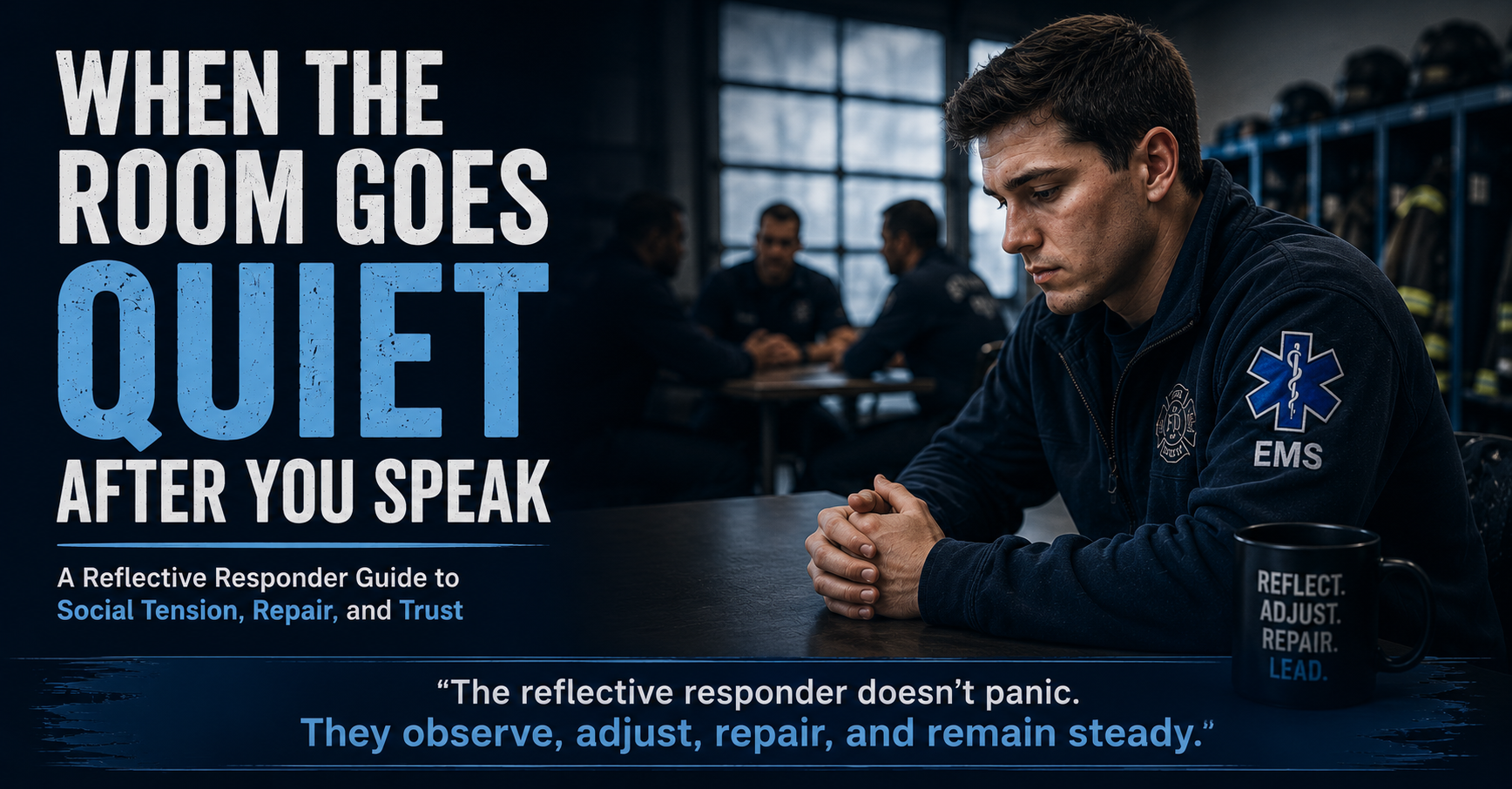
When the Room Goes Quiet After You Speak
You said something.
It didn’t feel explosive.
It didn’t feel cruel.
It didn’t even feel that serious.
But now the room is different.
The crew that normally jokes with you is quieter.
The shift feels colder.
You can feel it — that subtle social shift.
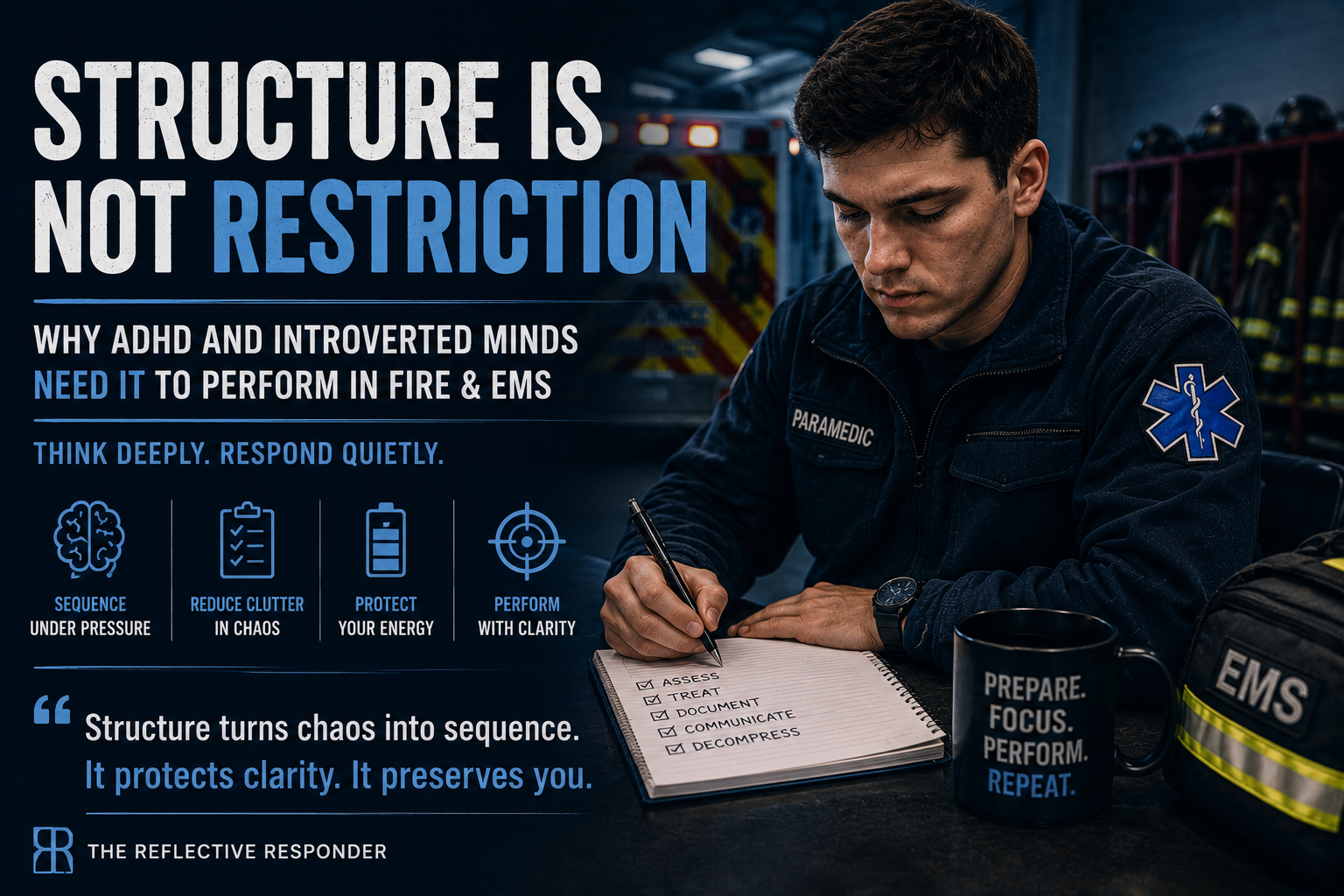
Structure Is Not Restriction
Structure gives permission to:
Decompress after difficult calls
Limit unnecessary stimulation
Mentally reset before the next patient
Protect energy instead of constantly spending it
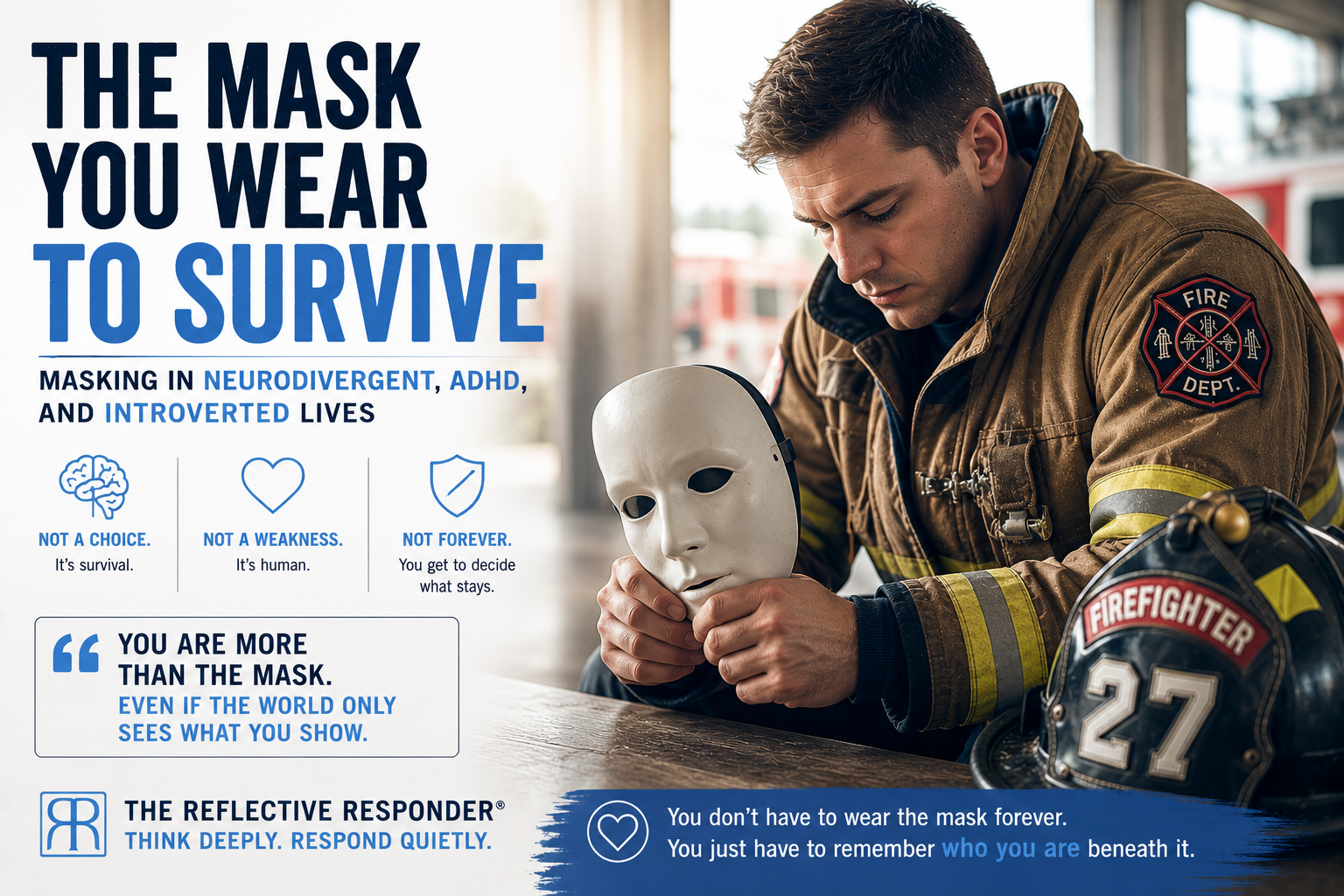
The Mask You Wear to Survive
Many responders learn to mask their true selves to fit expectations and stay safe. This reflection examines the emotional cost of constant performance and the quiet fatigue that comes from hiding who you are.
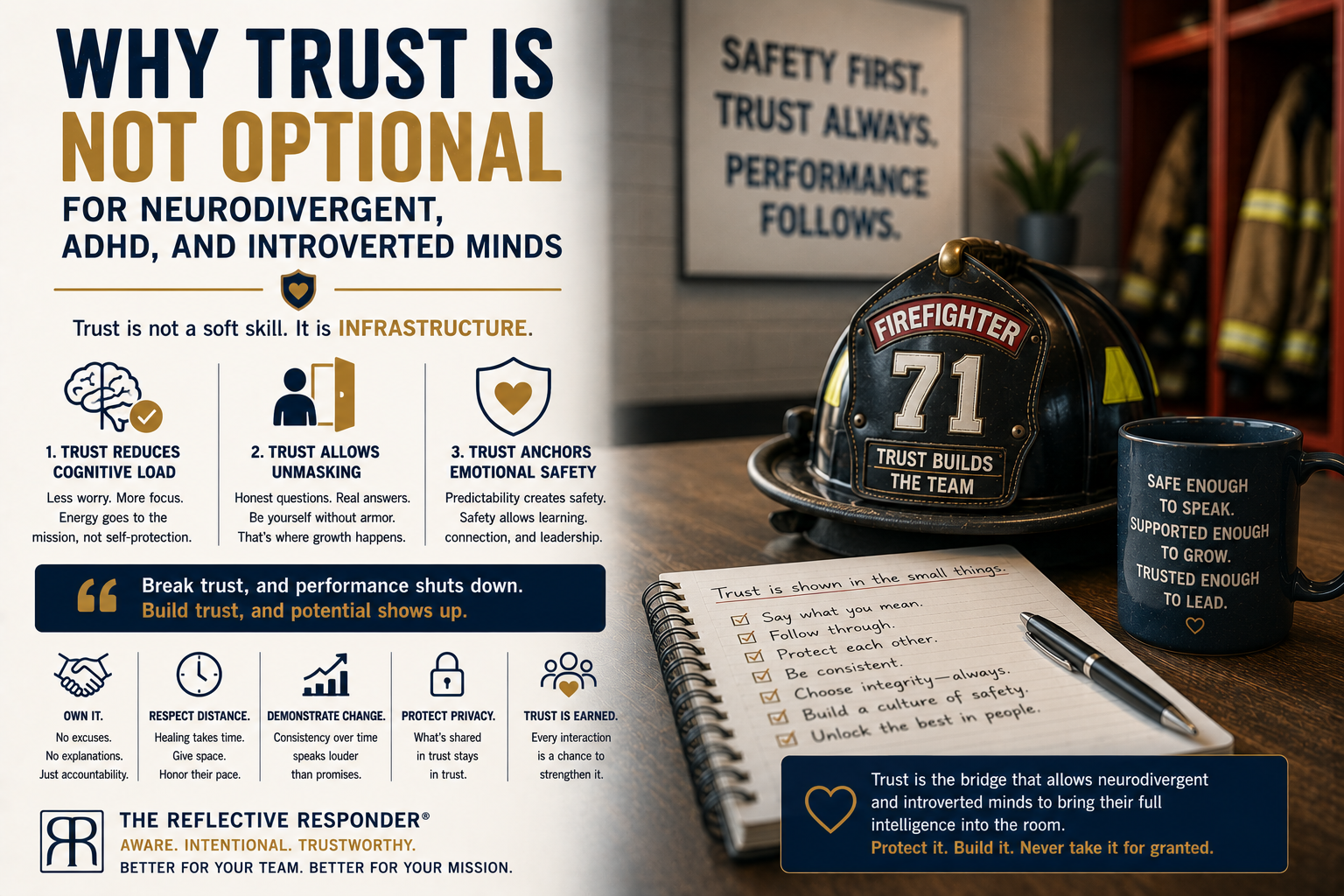
Why Trust Is Not Optional for Neurodivergent, ADHD, and Introverted Minds
Trust is not a luxury for neurodivergent and introverted responders—it is a requirement for safety and performance. This article explains how trust affects cognition, communication, and decision-making under stress.

When You Set Boundaries, the Free Ride Ends
Setting boundaries often reveals who benefited from you having none. This reflection examines why pushback isn’t a sign of failure, but evidence that you are protecting your energy, identity, and well-being.
When You Can’t Turn It Off—and What To Do Next
For many responders, the nervous system never fully powers down. This article explores hypervigilance, mental replay, and why rest feels unsafe—offering language to understand what’s happening beneath the surface.
When Urgency Overwhelms the Introverted Responder
Urgency can hijack clear thinking, especially for neurodivergent minds. This piece explores how constant pressure distorts decision-making, accelerates burnout, and makes it difficult to access calm, deliberate responses.
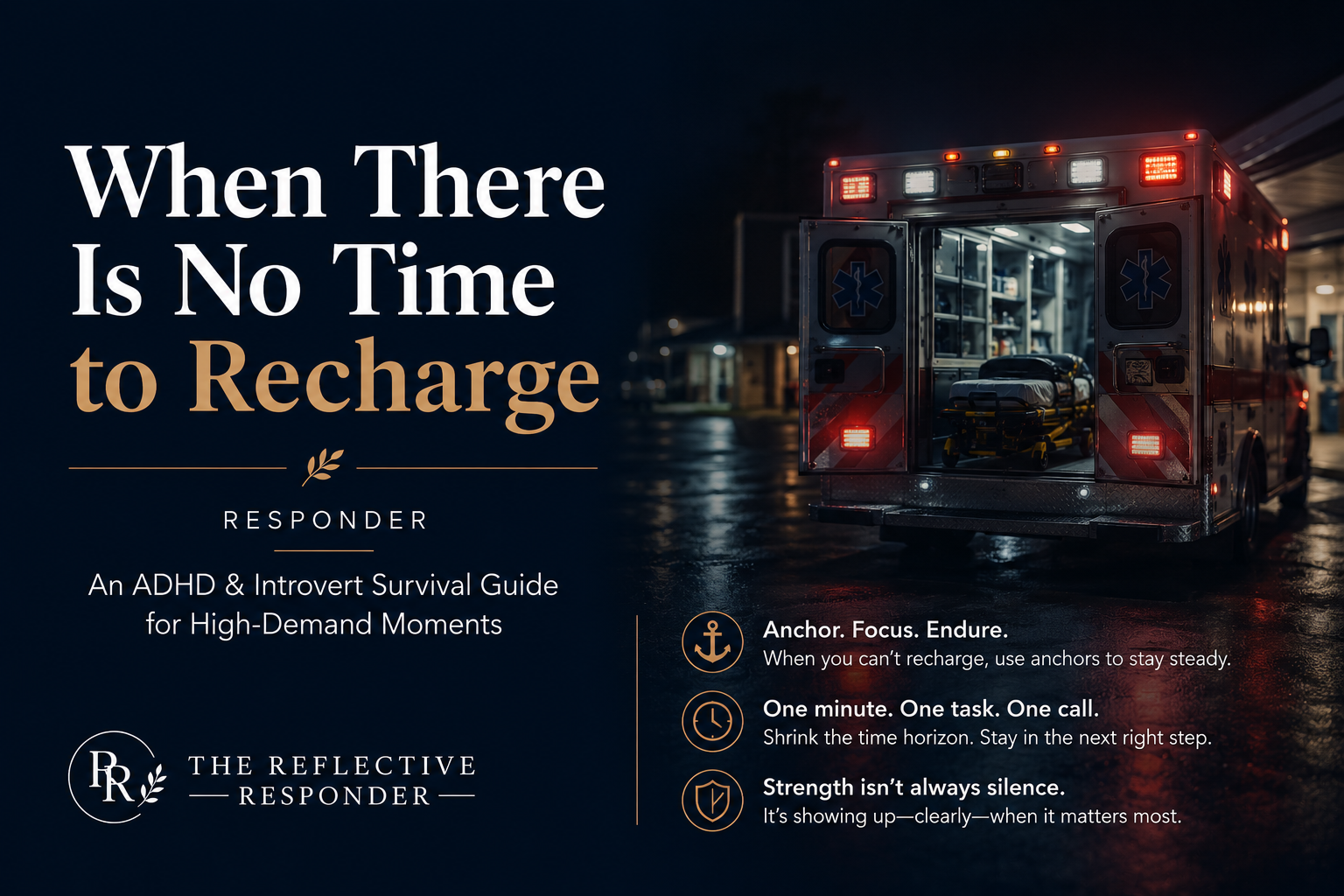
When There Is No Time to Recharge
When recovery is treated as optional, exhaustion becomes normalized. This reflection examines the cumulative toll of never fully recharging and why sustainable performance requires intentional pauses, not just endurance.
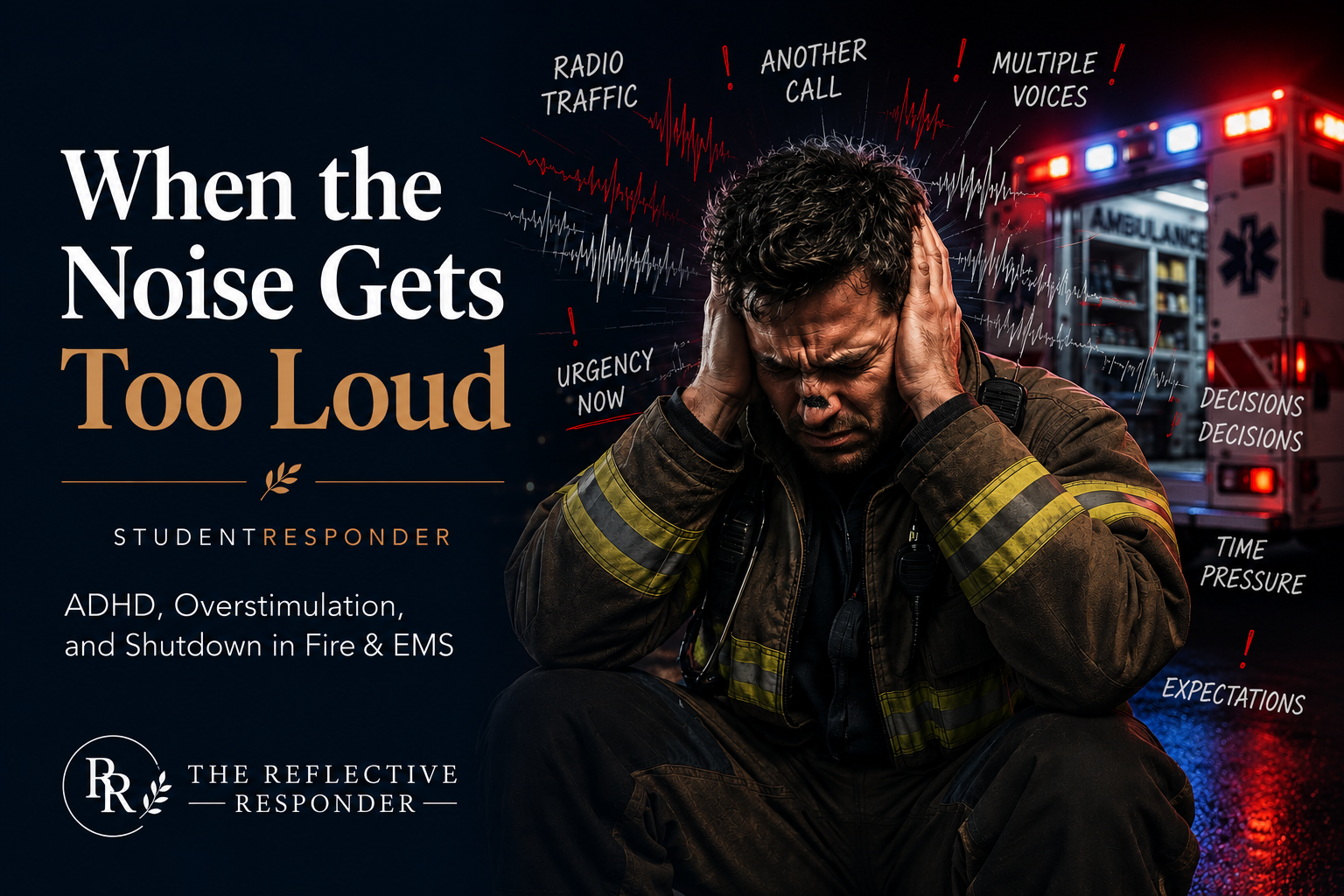
When the Noise Gets Too Loud
Noise isn’t always sound—it can be expectation, conflict, or constant input. This article explores sensory and cognitive overload, and why some responders shut down not from weakness, but from overload.
When Strength Isn’t Enough
There are moments when resilience and grit no longer carry you forward. This reflection explores the quiet truth that strength has limits—and why recognizing those limits is an act of wisdom, not failure.
When Self-Improvement Is Just Another Mask
Growth can become another way to avoid rest, emotion, or vulnerability. This piece examines how constant self-improvement can mask exhaustion and why healing isn’t always about becoming better.
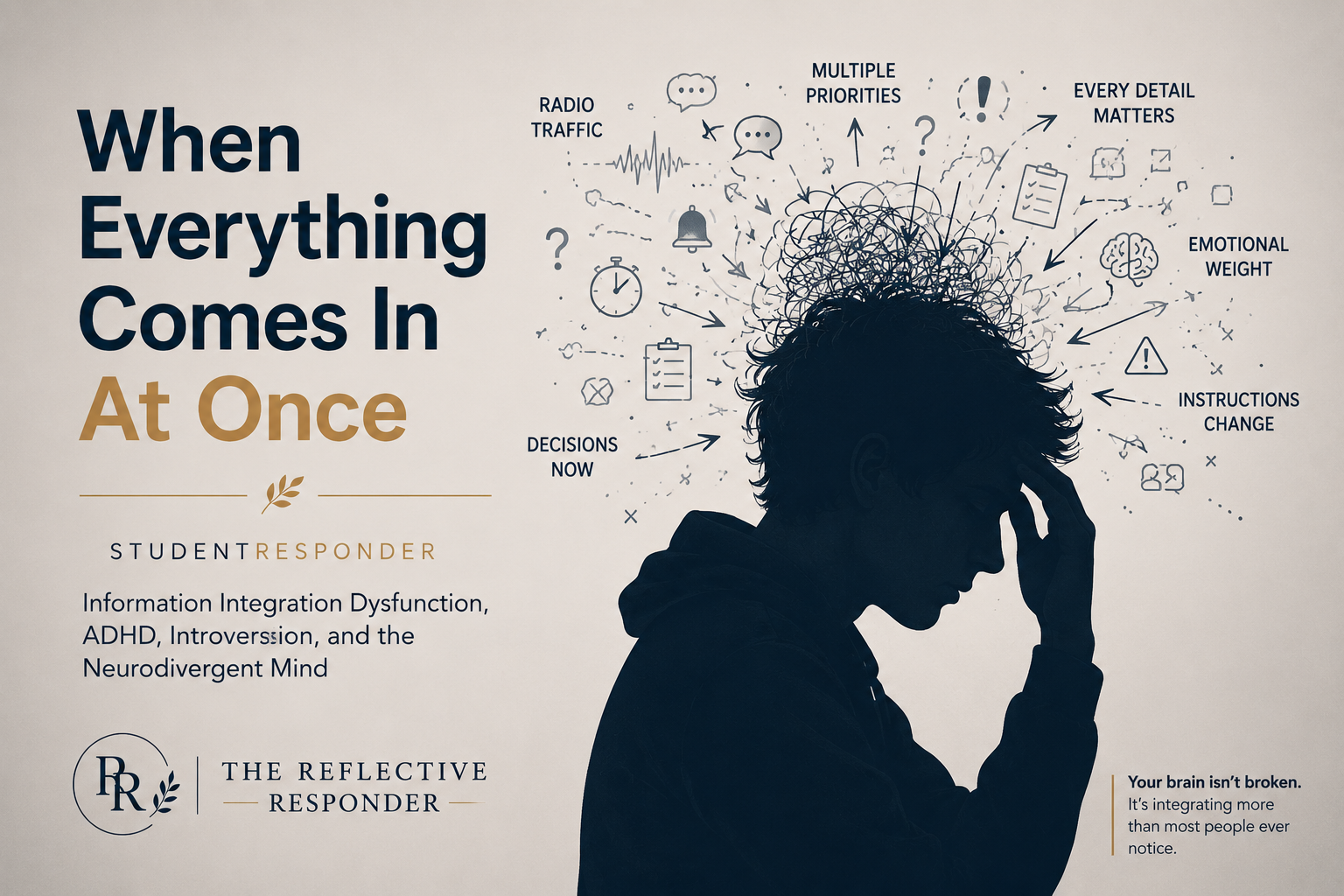
When Everything Comes In at Once
Some minds don’t receive stress in sequence—they receive it all at once. This article explores cognitive flooding, emotional stacking, and why overload can feel sudden, intense, and difficult to explain.
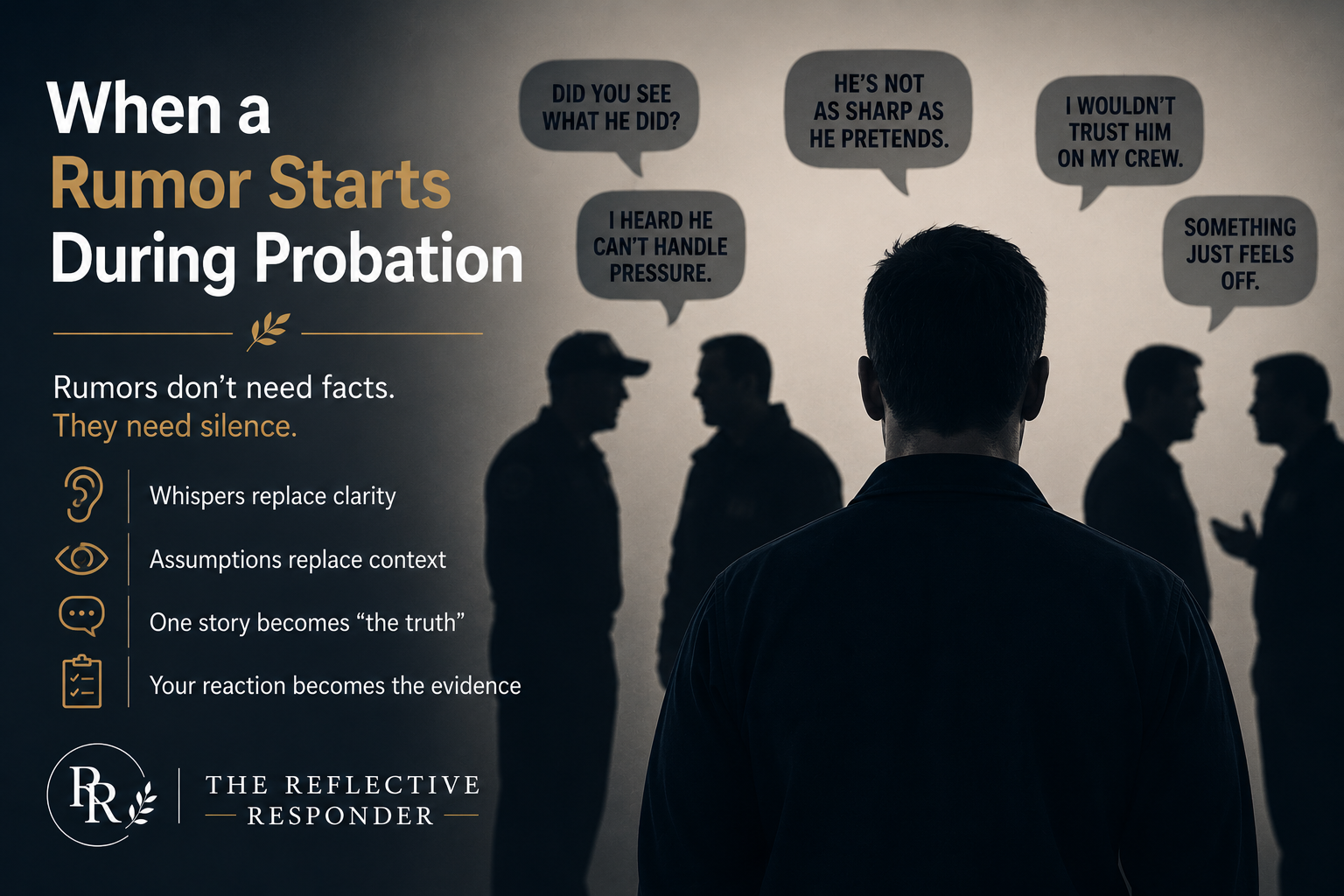
When a Rumor Starts During Probation
Probation is already loud—every move watched, every mistake magnified. When a rumor starts, it doesn’t just follow you through the station; it follows you into your head. This piece isn’t about defending yourself in the noise. It’s about how to stay grounded, professional, and intact when your reputation feels like it’s being written without you.
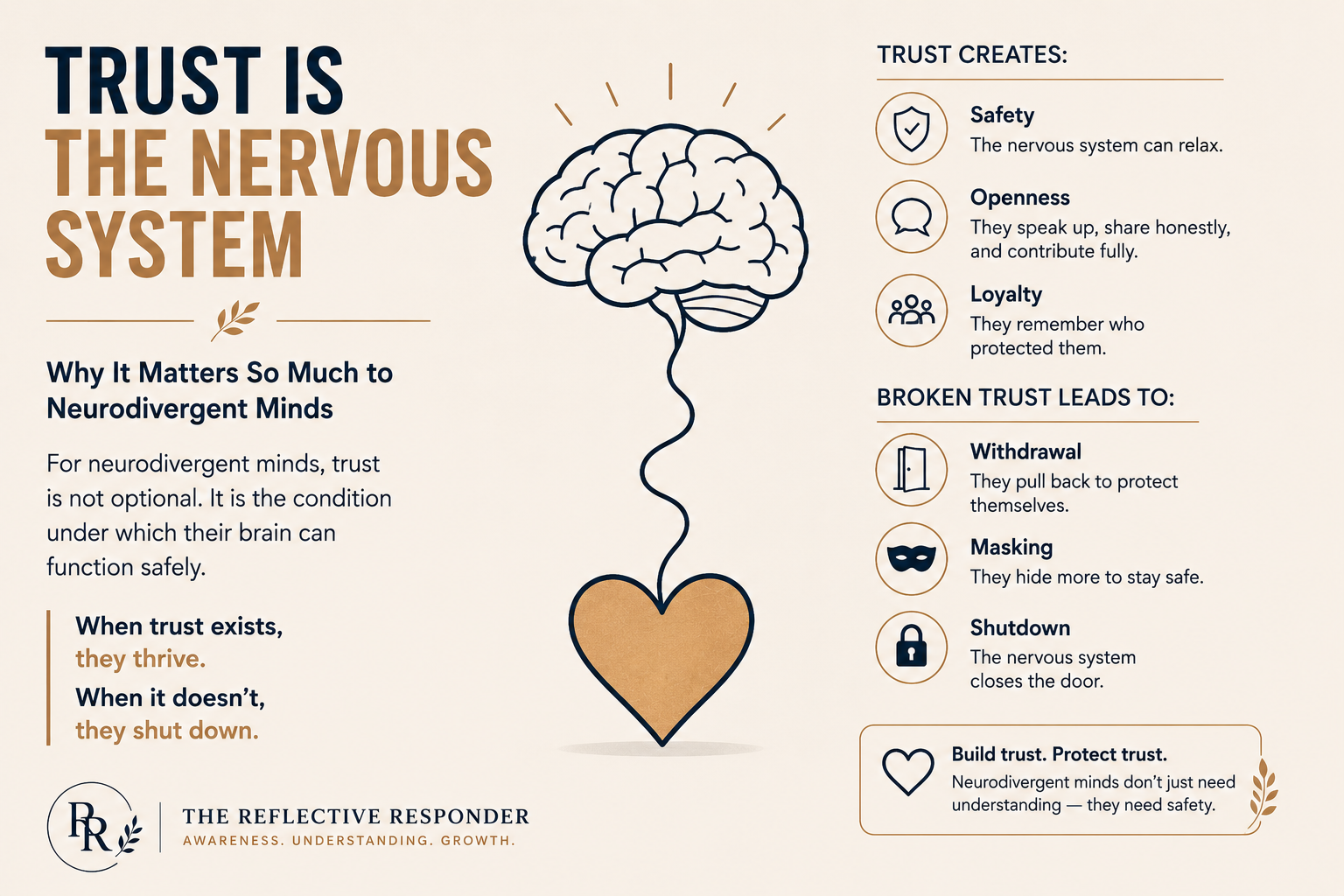
Trust Is the Nervous System
Trust isn’t soft. It’s physiological. When trust is present, the nervous system settles and people think clearly. When it’s missing, everything becomes defensive. This reflection explores how trust regulates performance, communication, and safety in Fire and EMS—long before a call ever comes in.
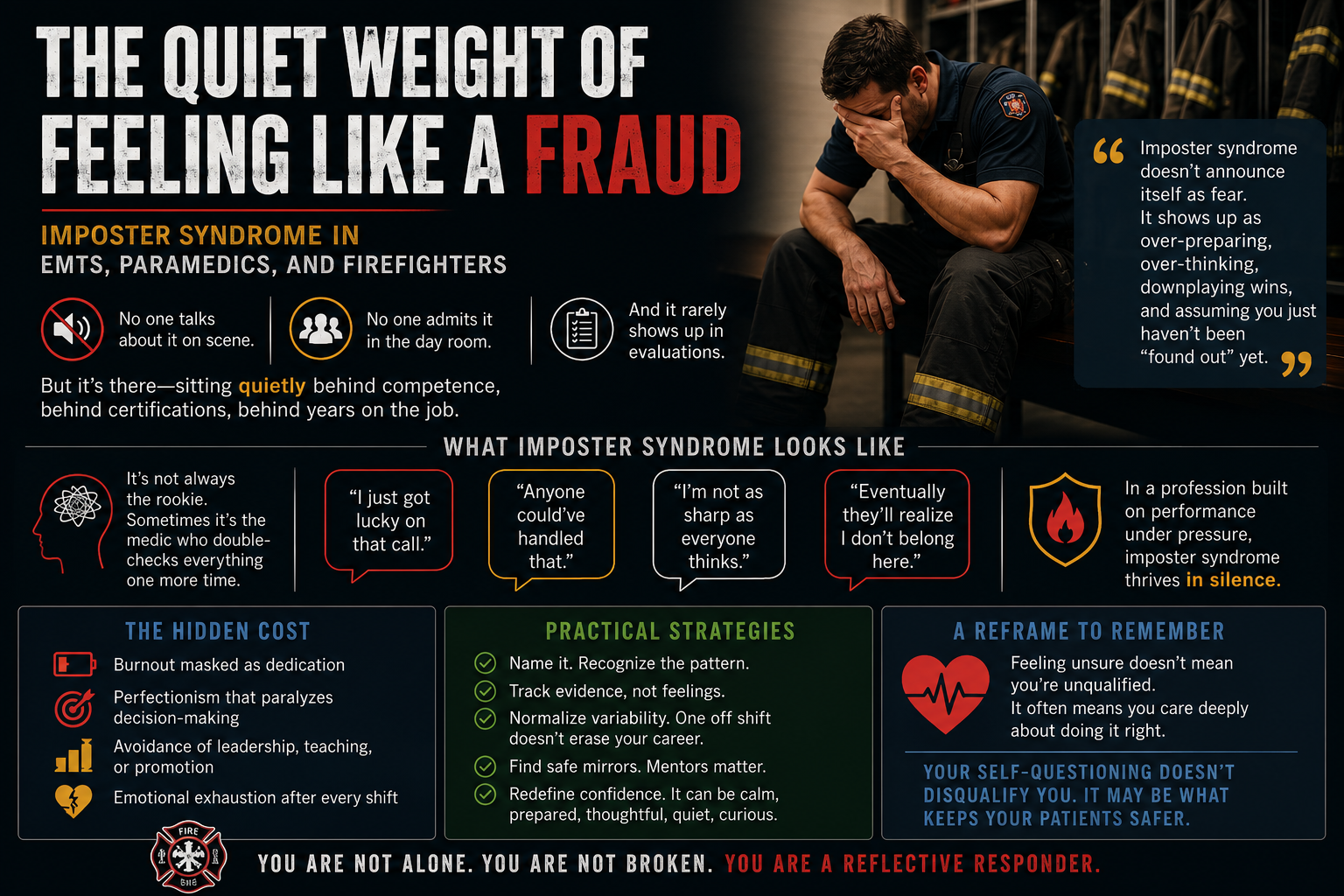
The Quiet Weight of Feeling Like a Fraud
Feeling like a fraud in the firehouse rarely shows up as doubt—it shows up as overpreparation, silence, and carrying more than your share. This article explores the quiet weight of imposter feelings in firefighters and EMS professionals, and why competence often hides behind self-questioning.
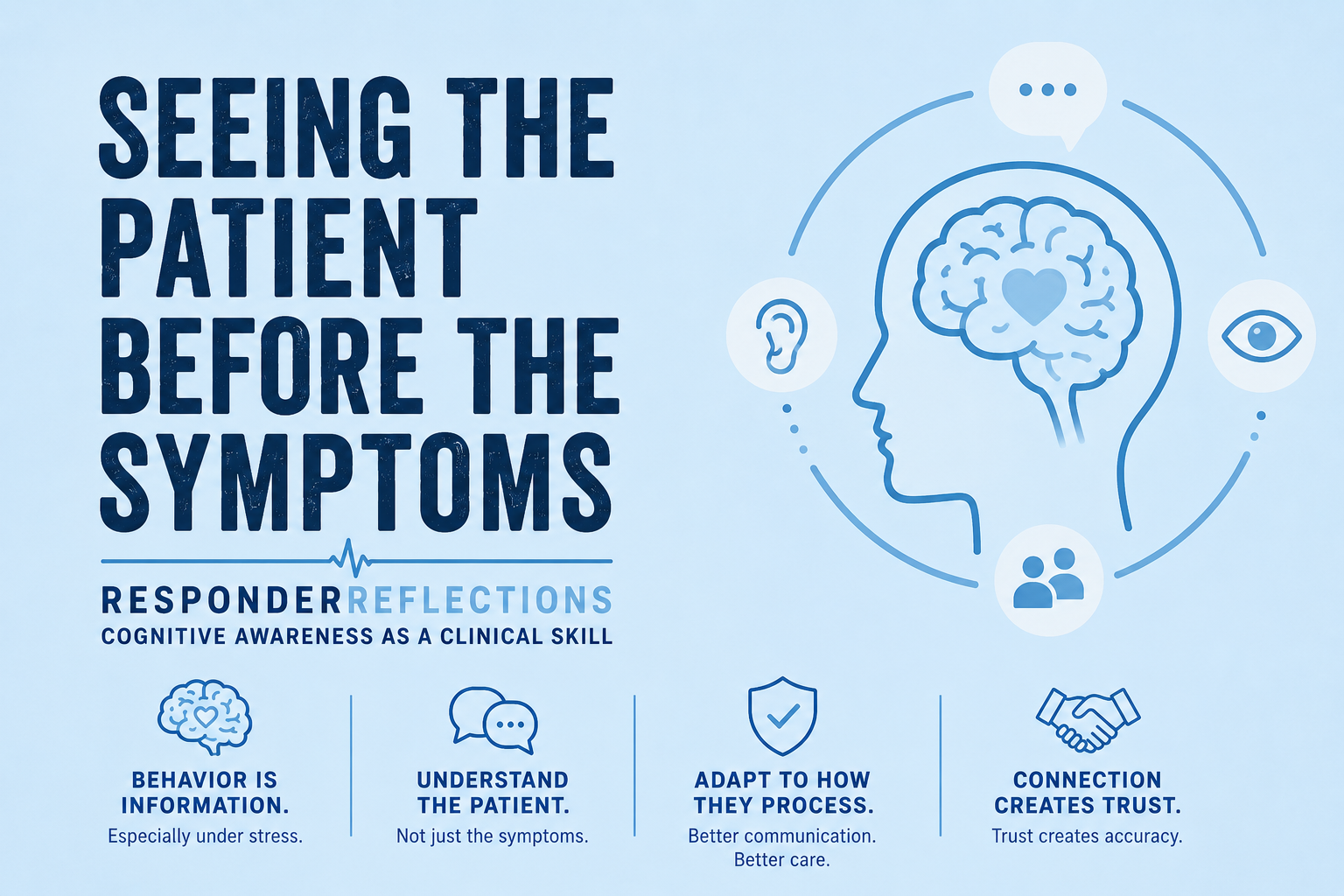
Seeing the Patient Before the Symptoms
Some patients will challenge you.
Some will question your decisions.
Some will sound critical or distrustful.
This is not always disrespect.
For many neurodivergent patients, questioning equals safety.
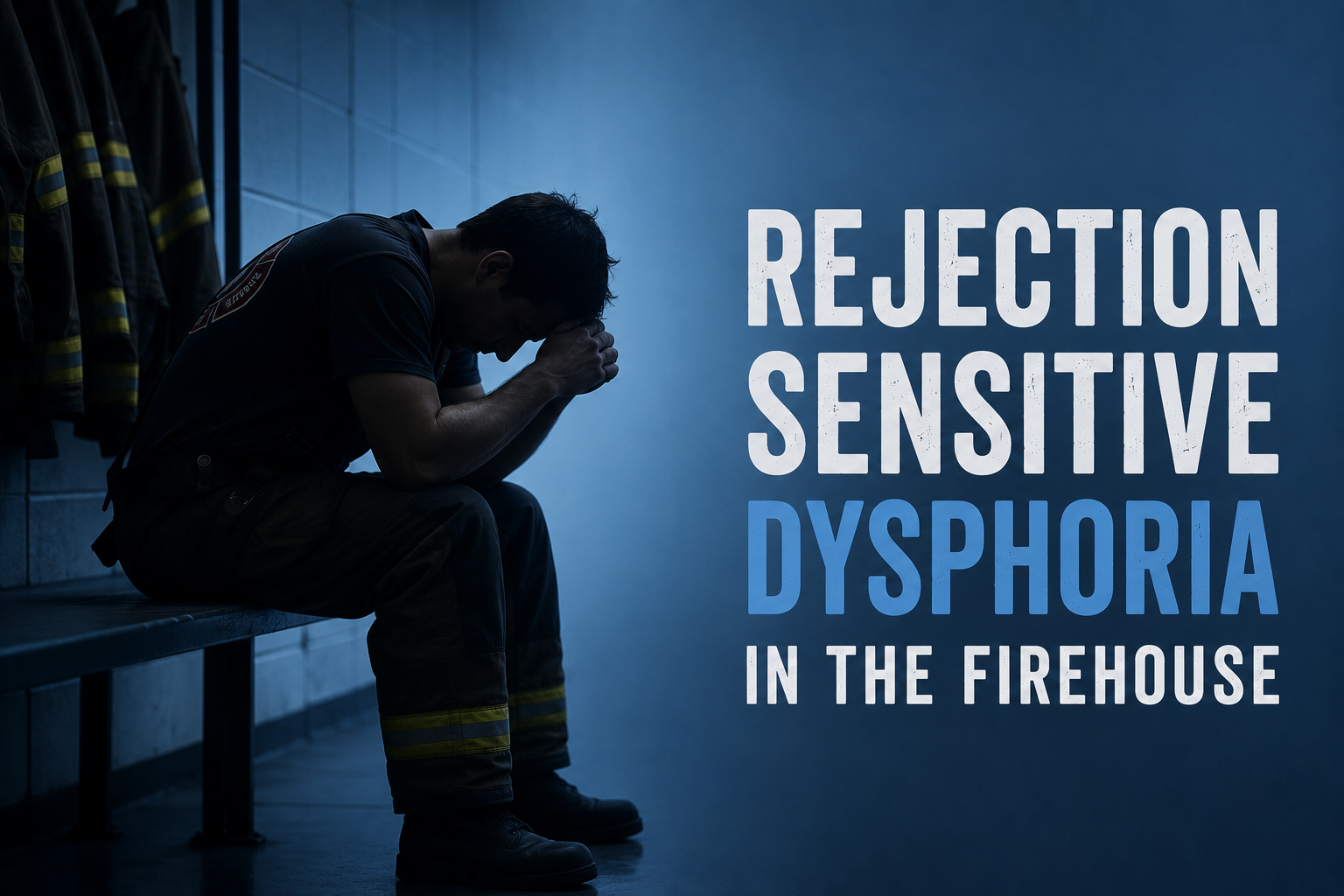
Rejection Sensitive Dysphoria (RSD) in the Firehouse
Rejection Sensitive Dysphoria often hides behind overperformance, withdrawal, or silence in the firehouse. This article explores how RSD shows up in firefighters, why feedback can feel overwhelming, and how awareness—not toughness—creates safer crews and healthier leadership.
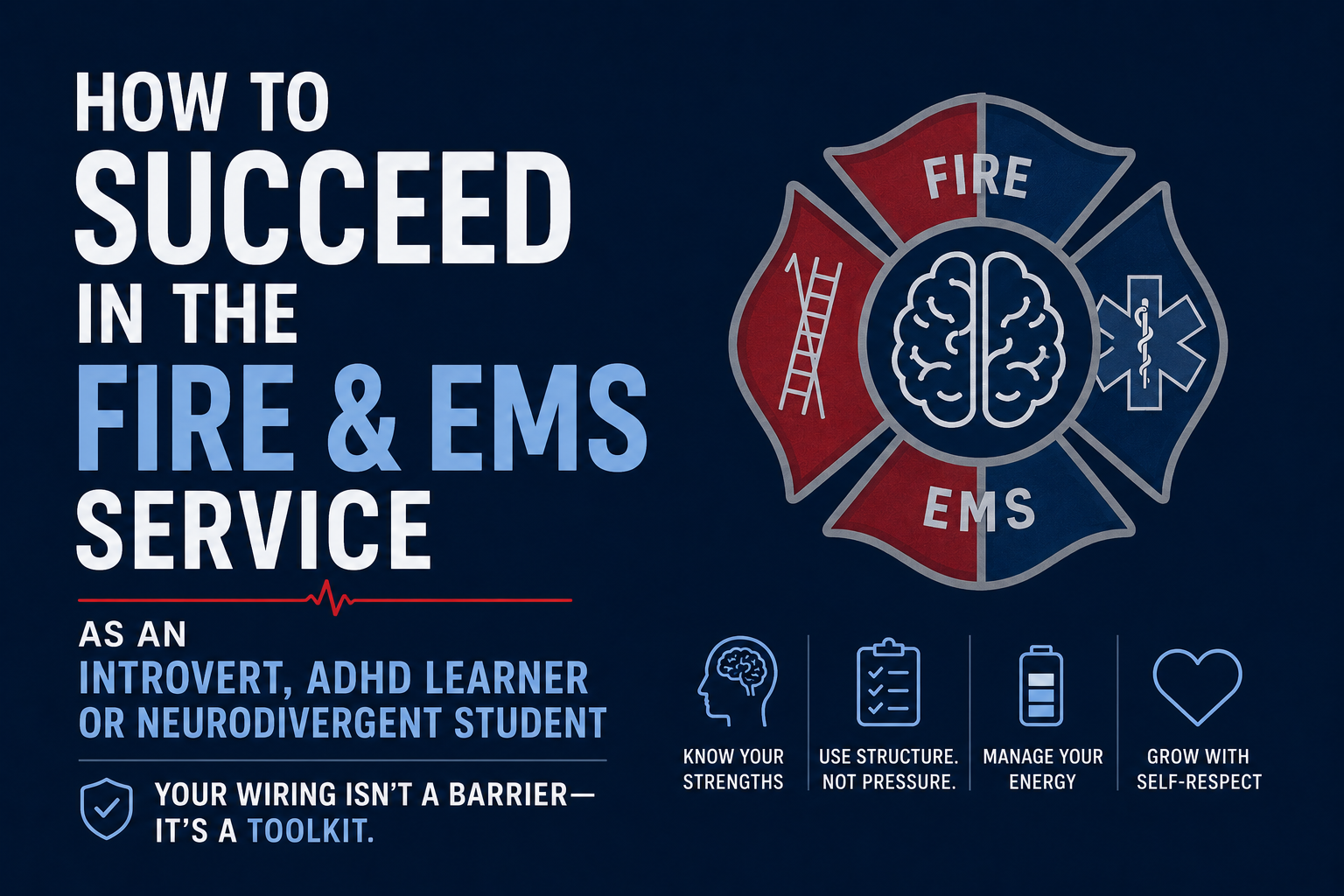
How to Succeed in the Fire and EMS Service as an Introvert, ADHD Learner or Neurodivergent Student
Success in fire and EMS doesn’t require changing how you think—it requires understanding it. This article offers practical strategies for introverted, ADHD, and neurodivergent students to navigate training, manage overload, build confidence, and succeed without masking or abandoning their natural strengths.
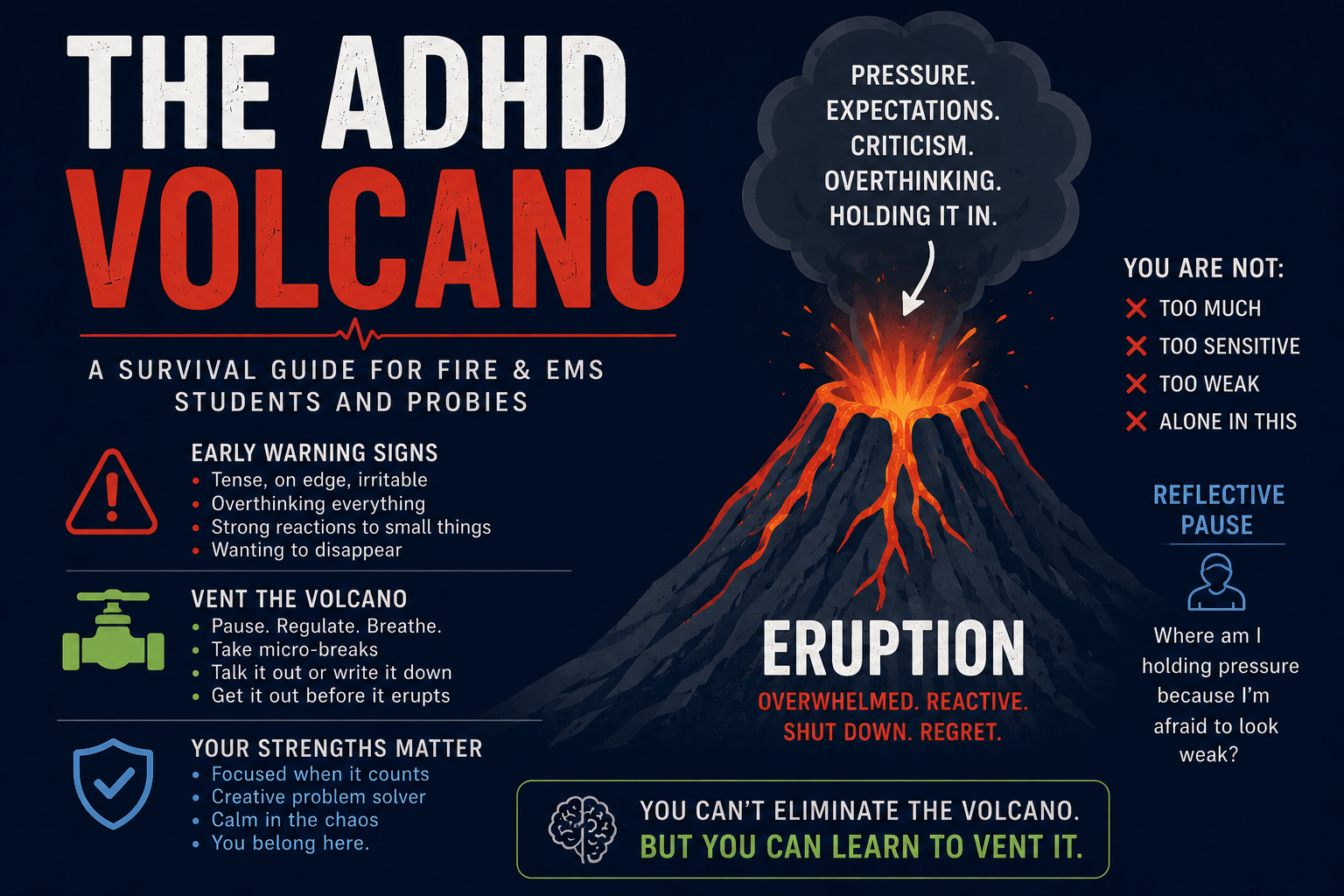
The ADHD Volcano
If you’re in EMT school, paramedic school, or on probation—and you have ADHD—there’s a good chance you’ve felt this:
You’re holding it together.
You’re doing what you’re told.
You’re trying not to stand out.
And then something small happens.
A comment.
A look.
A correction.
And suddenly it feels like too much.
That’s not weakness.
That’s the ADHD volcano.
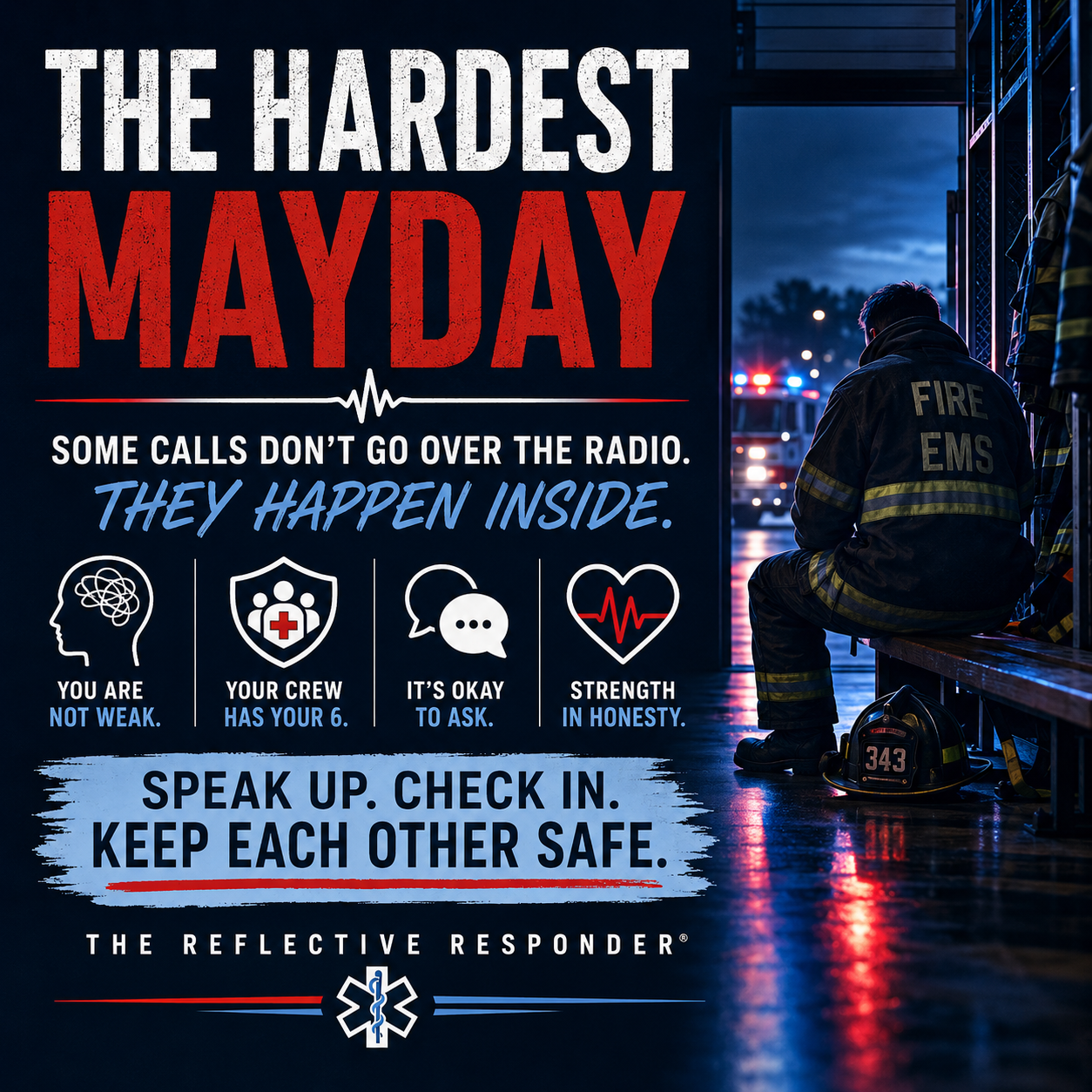
The Hardest Mayday
When you’re wired to solve your own problems, asking for help feels like failure. When you’ve built an identity around competence and control, needing support feels like weakness—even when you’d never judge someone else for it.
So they suffer quietly.
They carry the bad calls home.
They replay decisions in their head at 0300.
They sit in their truck after shift, not ready to go inside yet.
Not because they don’t trust their crew.