
Insight Library
A growing collection of thoughtful writing for students, responders, and leaders.
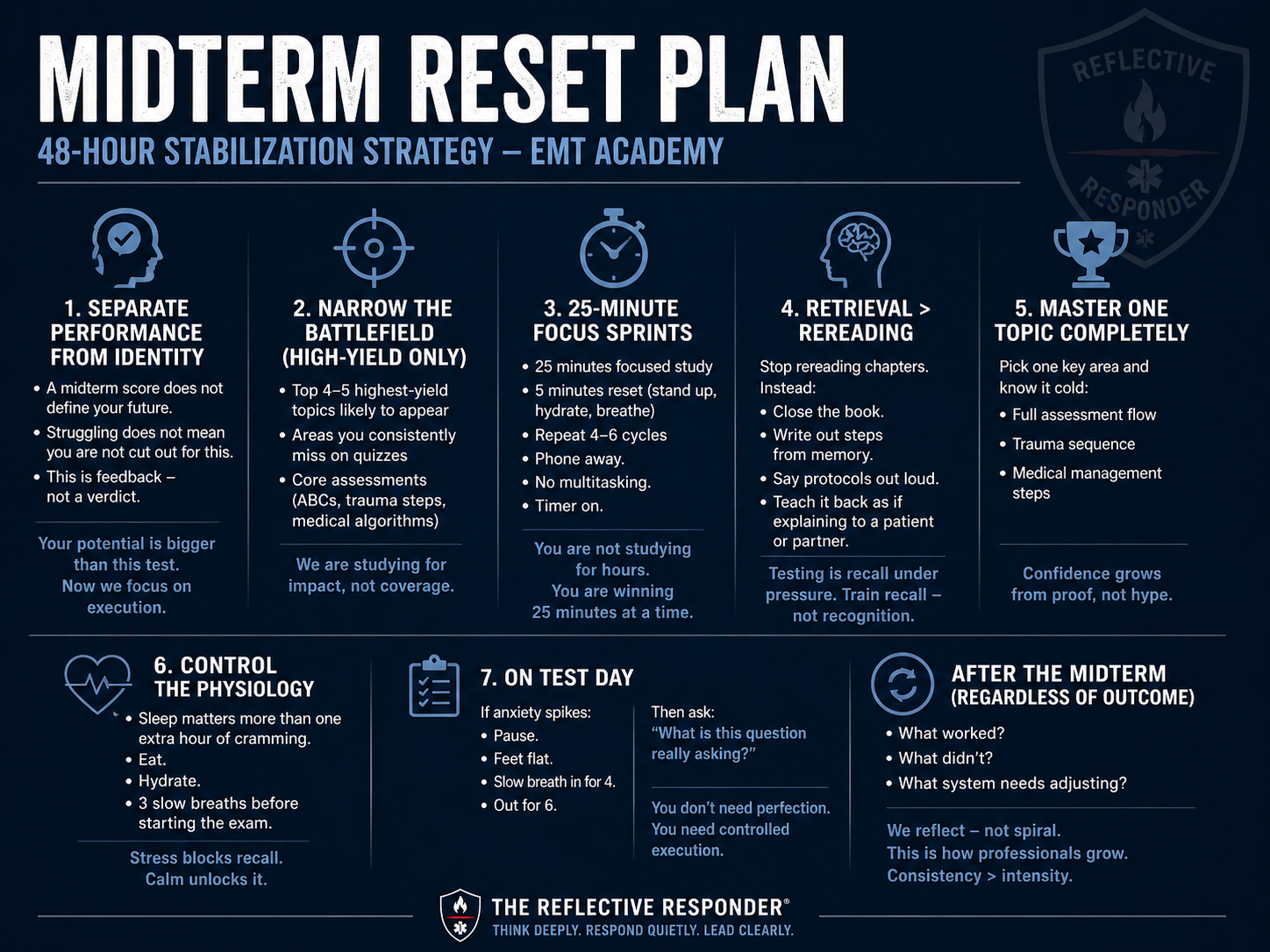
MIDTERM RESET PLAN
You are not on the edge because you’re incapable.
You’re on the edge because your system hasn’t fully caught up to your ability yet.
The Weight of Shame in Fire & EMS
Sometimes you need correction.
Sometimes you need strategy.
Sometimes you simply need a small win to rebuild momentum.
The First Ride: When Your Brain Won’t Sit Down
The first ride isn’t about performance — it’s about presence. A grounded approach for nervous, ADHD, and introverted EMS students.
The Quiet Struggle You Can’t See: Auditory Processing Disorder in the Fire & EMS World
This profession runs on sound.
Radio reports
Verbal orders
Dispatch updates
Patient histories
Rapid-fire team communication
Station banter layered over apparatus noise
It’s constant auditory input.
Navigating EMT or Paramedic School as an Introvert with Rejection Sensitive Dysphoria
Emergency medicine education is loud by design.
There are voices calling out vitals, instructors stopping scenarios mid-sentence, classmates watching every move you make. Feedback is immediate. Mistakes are public. Growth happens in front of an audience.
The Quiet Student on Day One: You’re Not Behind — You’re Processing
The first day of EMT or paramedic school is not just orientation.
It’s exposure.
Exposure to personalities.
Exposure to expectation.
Exposure to the version of yourself you hope you can become.
If you are introverted or neurodivergent, day one doesn’t feel exciting.
It feels loud.
The Quiet Movements No One Talks About
You’re sitting in class.
Your leg won’t stop bouncing.
You twist your pen. Click it. Spin it. Tap it.
You rub your thumb against the seam of your glove.
You pace in the bay longer than necessary.
You chew the inside of your cheek during report.
And somewhere in the back of your mind, you think:
Why can’t I just sit still like everyone else?
When the Room Goes Quiet After You Speak
You said something.
It didn’t feel explosive.
It didn’t feel cruel.
It didn’t even feel that serious.
But now the room is different.
The crew that normally jokes with you is quieter.
The shift feels colder.
You can feel it — that subtle social shift.
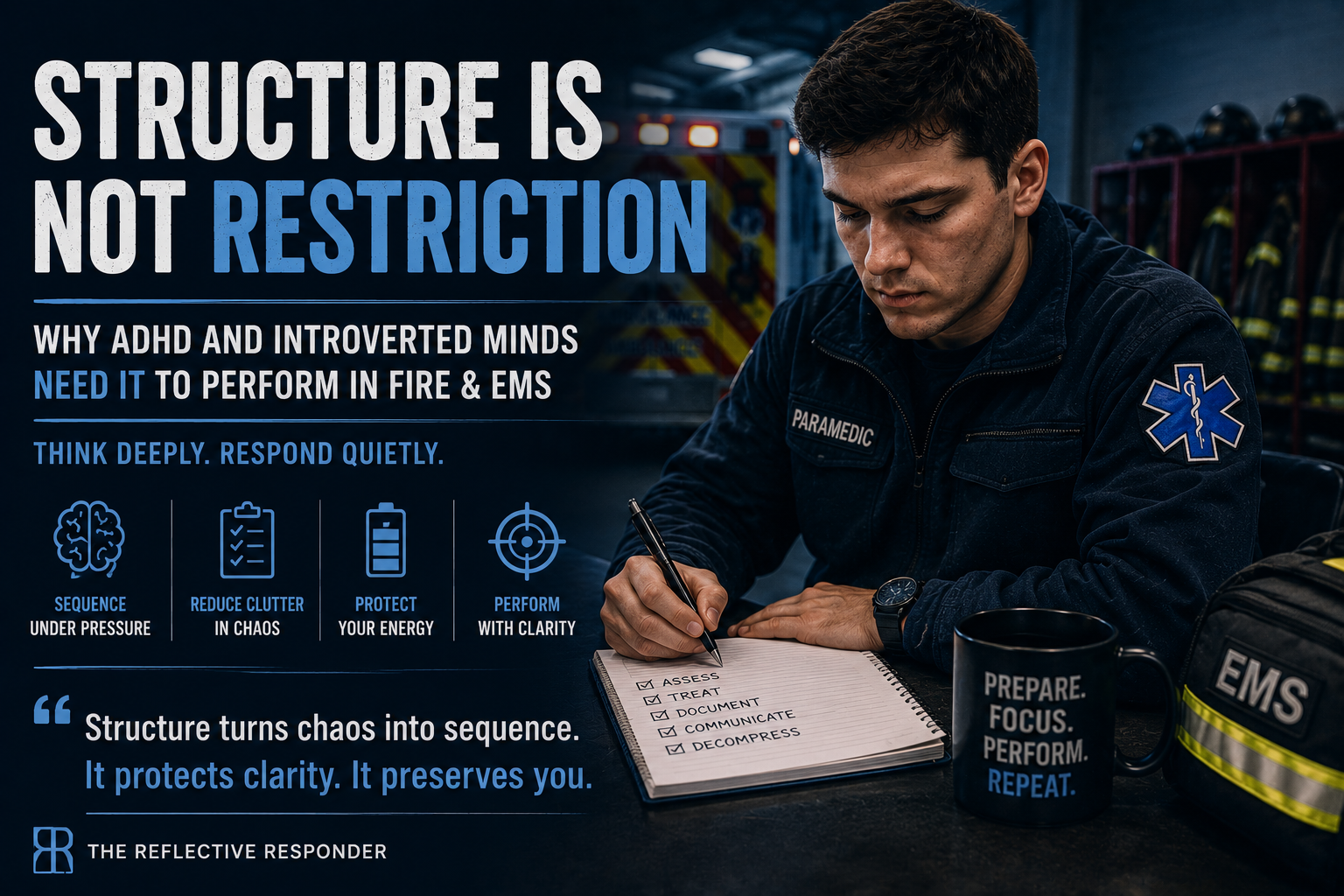
Structure Is Not Restriction
Structure gives permission to:
Decompress after difficult calls
Limit unnecessary stimulation
Mentally reset before the next patient
Protect energy instead of constantly spending it
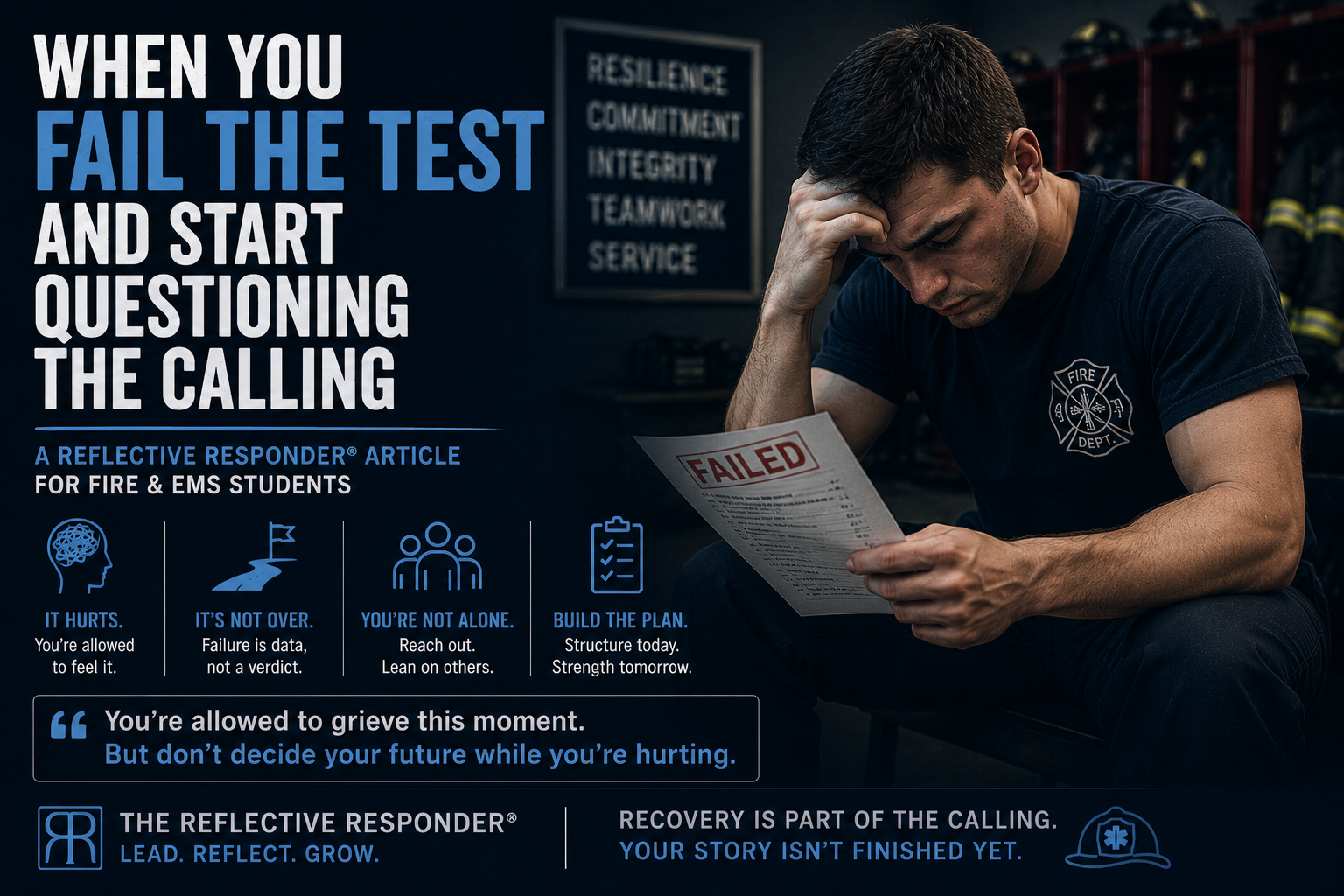
When You Fail the Test and Start Questioning the Calling
No one prepares you for the silence that follows failure.
The moment the entrance exam results come back.
The score you didn’t expect.
The weight in your chest that feels heavier than disappointment—it feels like shame.
You didn’t just fail a test.
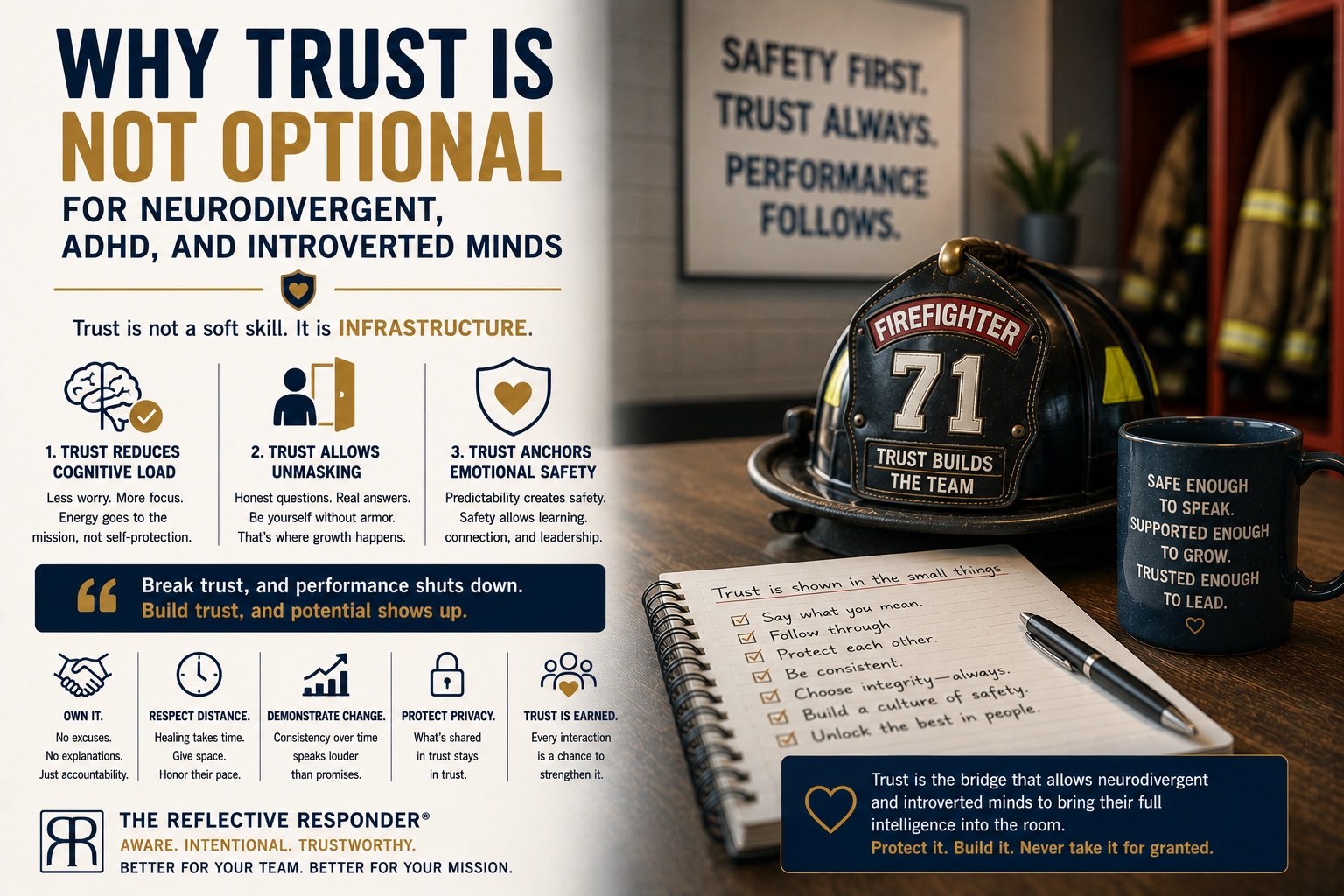
Why Trust Is Not Optional for Neurodivergent, ADHD, and Introverted Minds
Trust is not a luxury for neurodivergent and introverted responders—it is a requirement for safety and performance. This article explains how trust affects cognition, communication, and decision-making under stress.
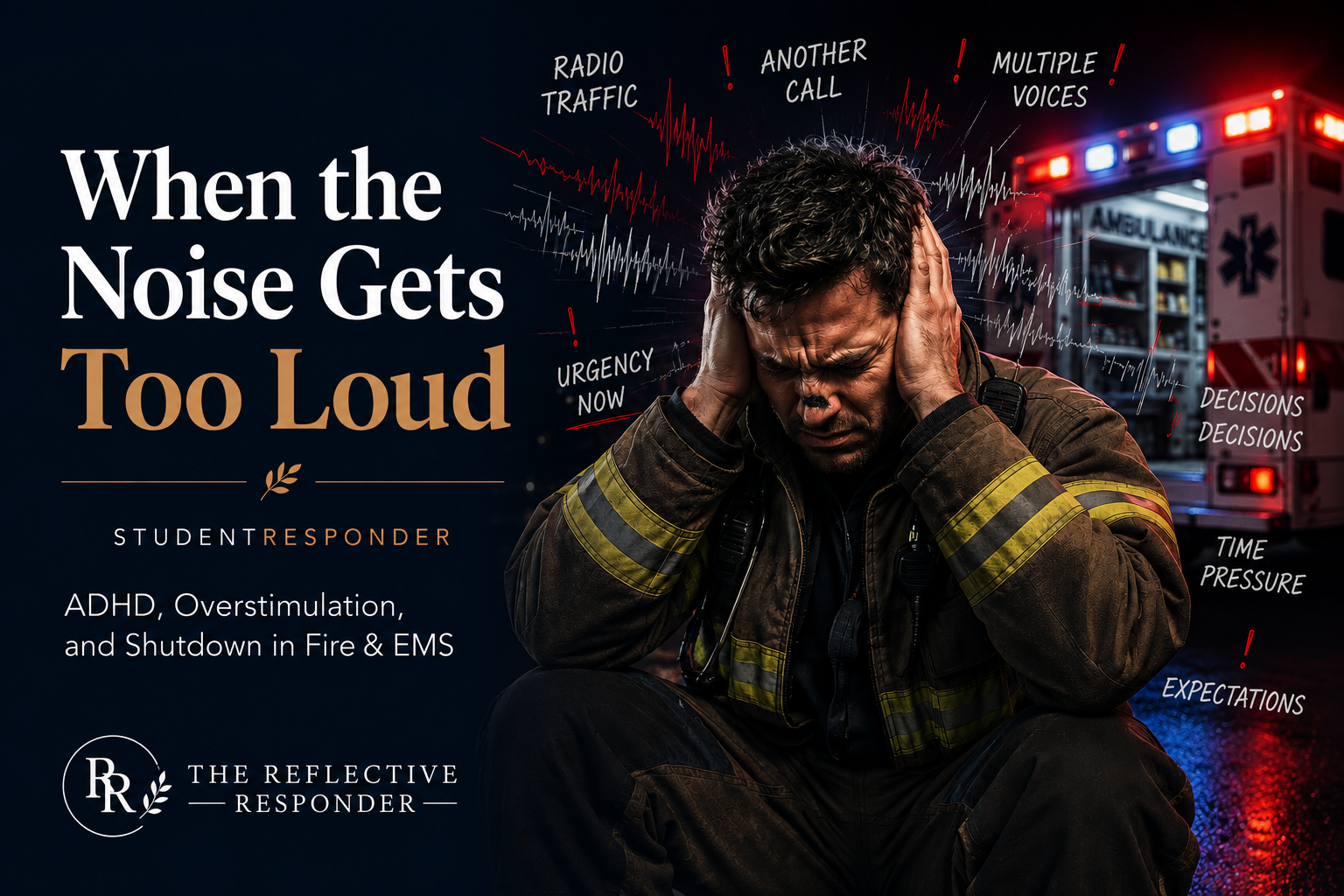
When the Noise Gets Too Loud
Noise isn’t always sound—it can be expectation, conflict, or constant input. This article explores sensory and cognitive overload, and why some responders shut down not from weakness, but from overload.
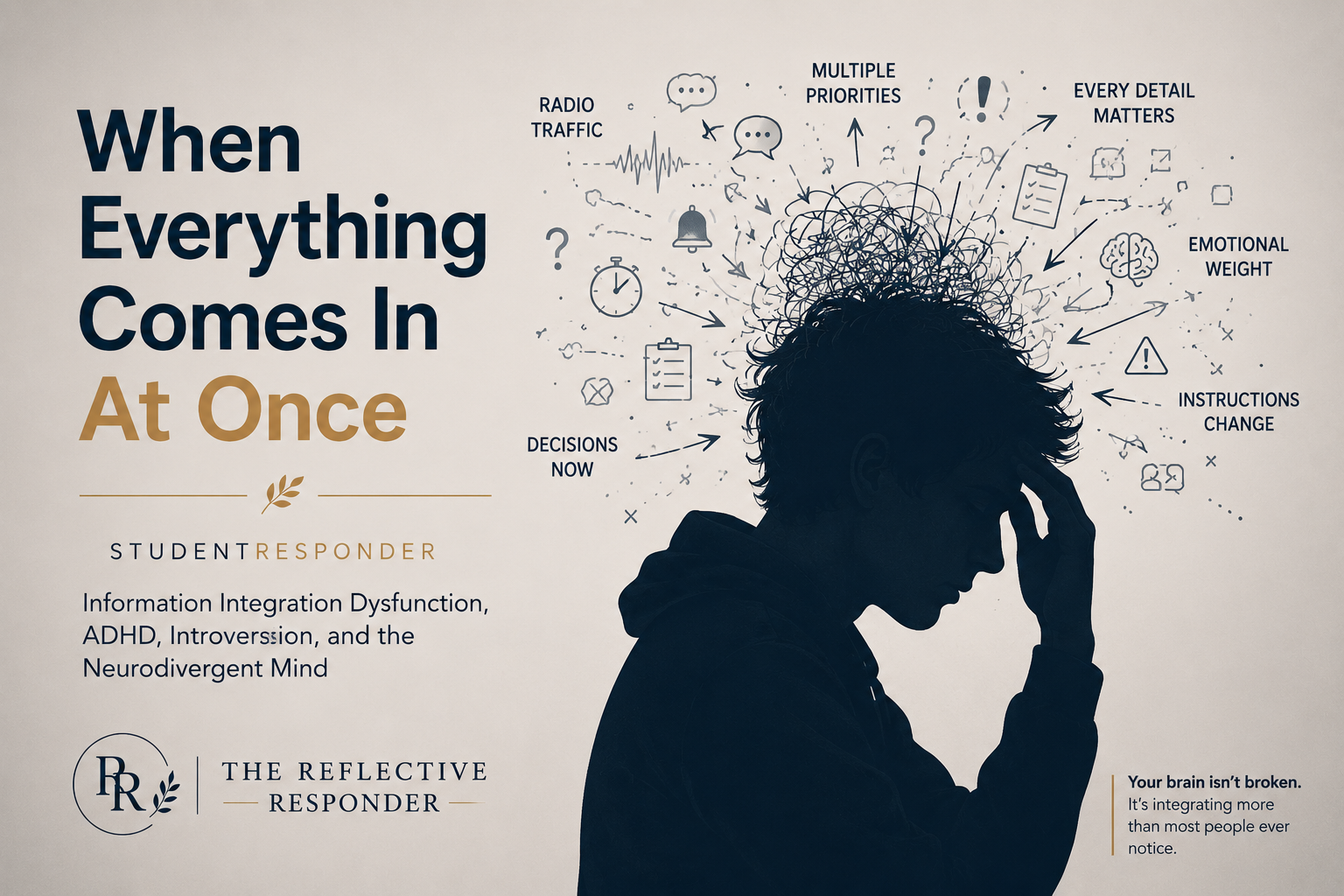
When Everything Comes In at Once
Some minds don’t receive stress in sequence—they receive it all at once. This article explores cognitive flooding, emotional stacking, and why overload can feel sudden, intense, and difficult to explain.

Tips for Introverts Learning in Fire & EMS
ADHD doesn’t make EMT or paramedic school harder because of ability—it makes it harder because of structure. This article explores how ADHD shows up in EMS education and offers practical strategies to manage focus, overload, testing pressure, and learning without shame.
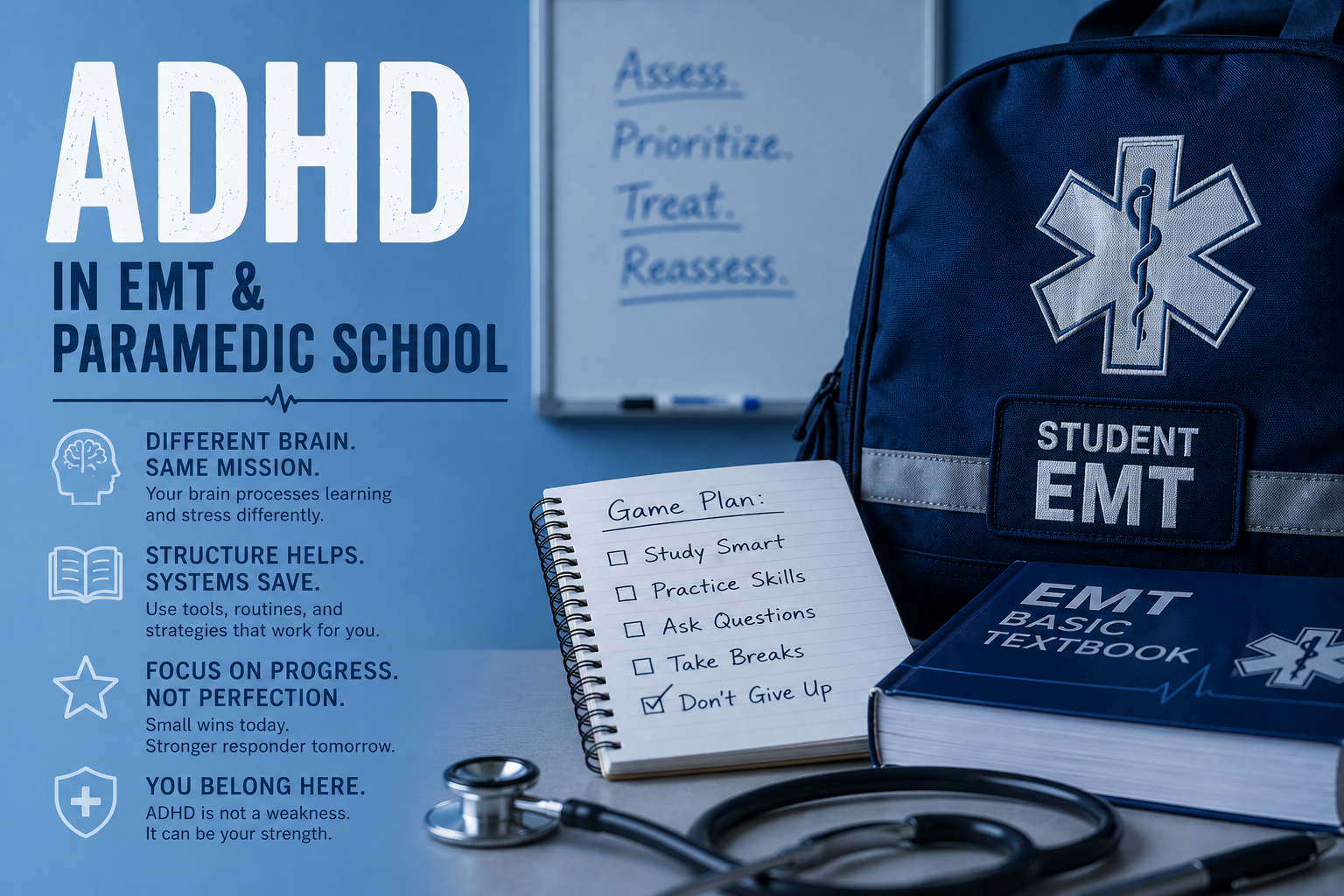
ADHD in EMT & Paramedic School
ADHD doesn’t make EMT or paramedic school harder because of ability—it makes it harder because of structure. This article explores how ADHD shows up in EMS education and offers practical strategies to manage focus, overload, testing pressure, and learning without shame.
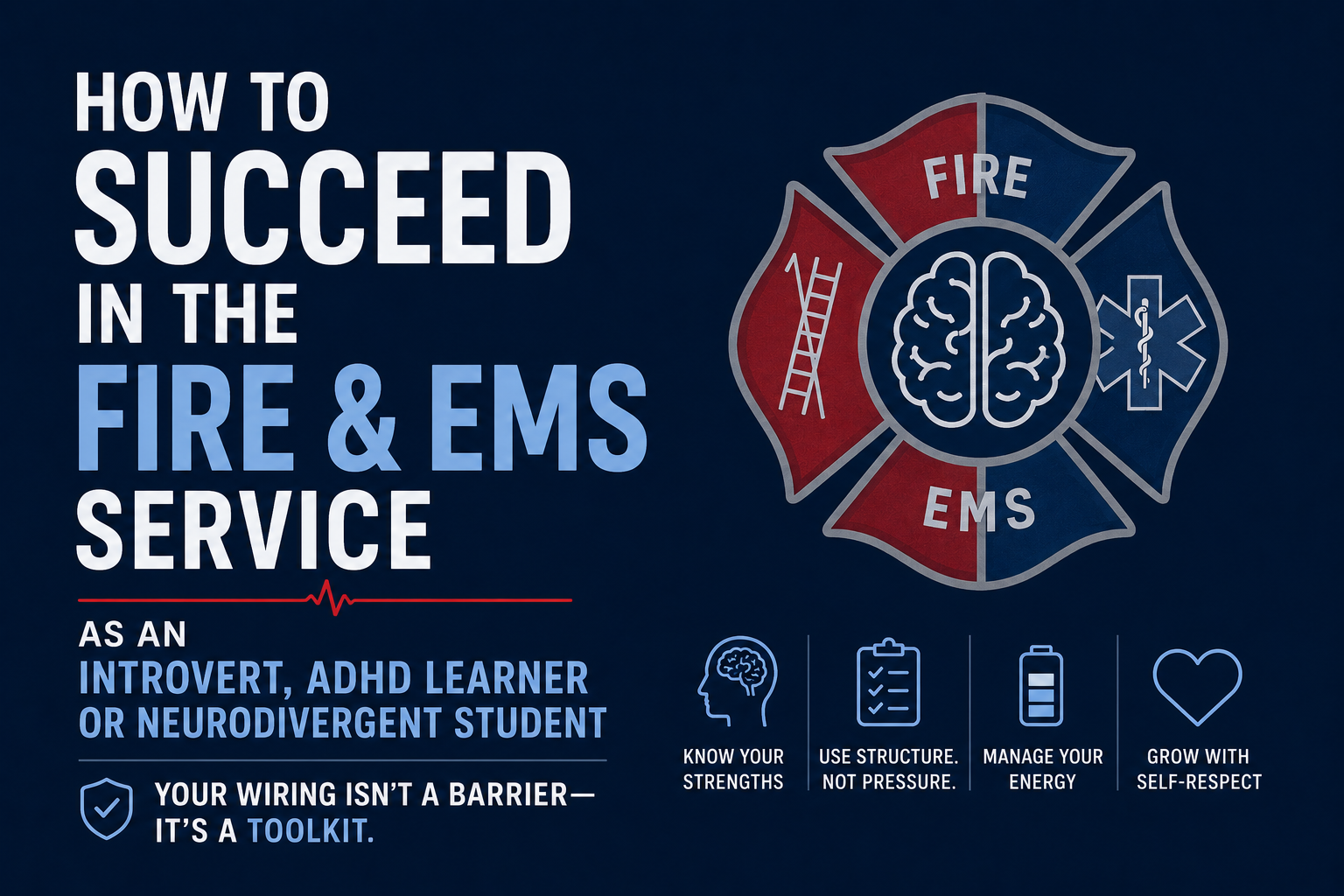
How to Succeed in the Fire and EMS Service as an Introvert, ADHD Learner or Neurodivergent Student
Success in fire and EMS doesn’t require changing how you think—it requires understanding it. This article offers practical strategies for introverted, ADHD, and neurodivergent students to navigate training, manage overload, build confidence, and succeed without masking or abandoning their natural strengths.
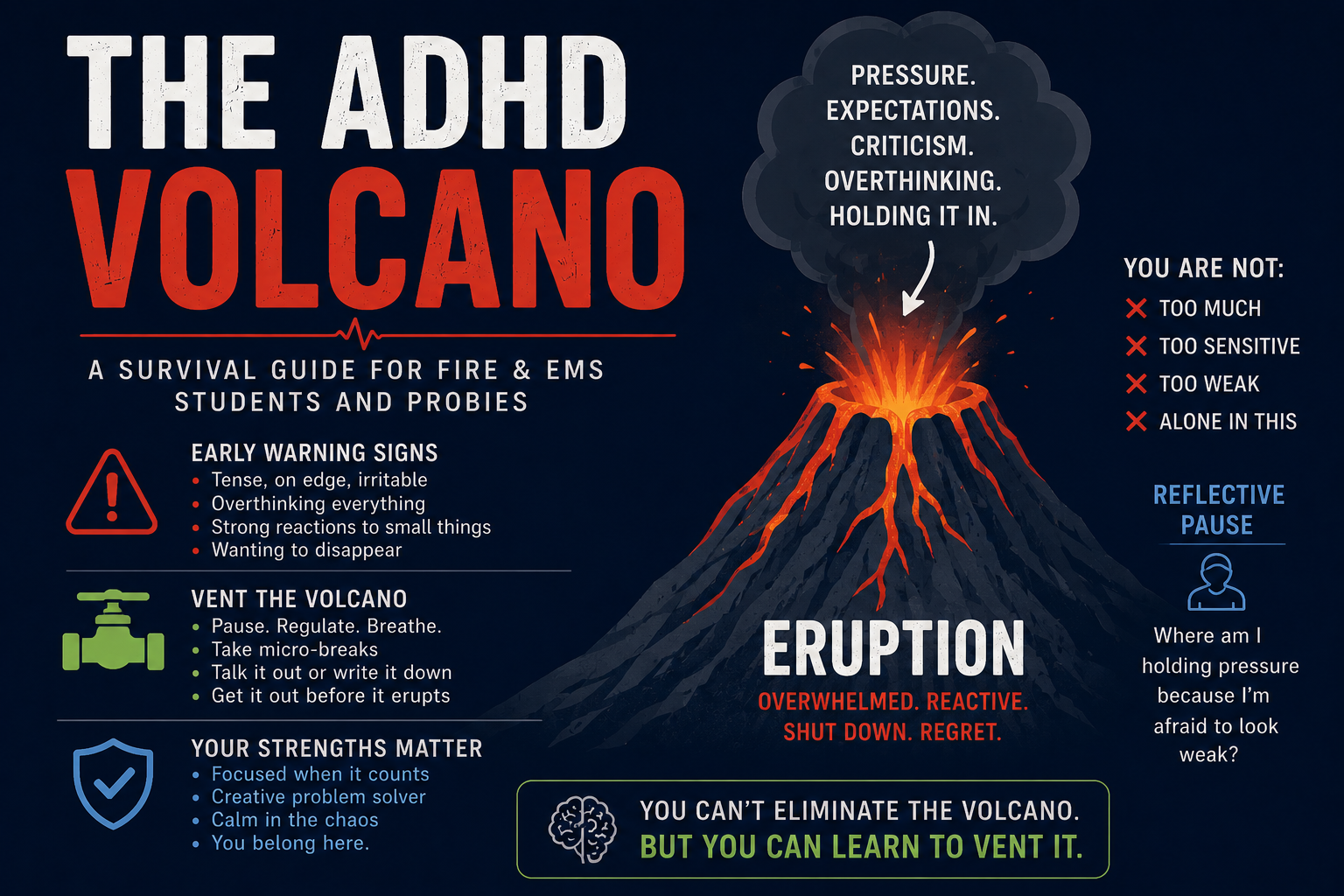
The ADHD Volcano
If you’re in EMT school, paramedic school, or on probation—and you have ADHD—there’s a good chance you’ve felt this:
You’re holding it together.
You’re doing what you’re told.
You’re trying not to stand out.
And then something small happens.
A comment.
A look.
A correction.
And suddenly it feels like too much.
That’s not weakness.
That’s the ADHD volcano.
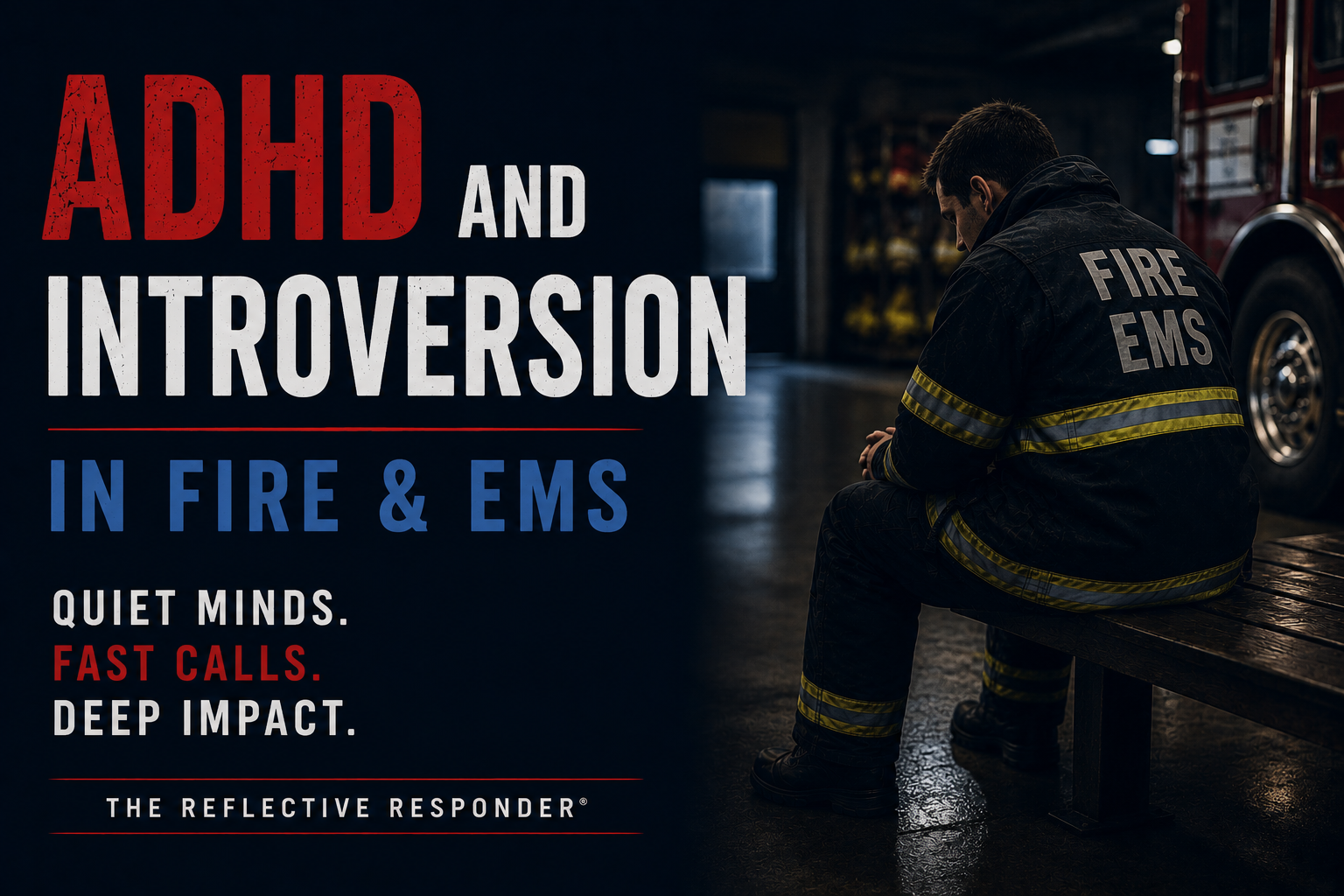
ADHD and Introversion in Fire & EMS
Some of the most capable responders are quieter.
Some think deeply before they speak.
Some carry busy, restless minds behind calm exteriors.